Kids Wearing Halloween Costume Graphics & Illustrations
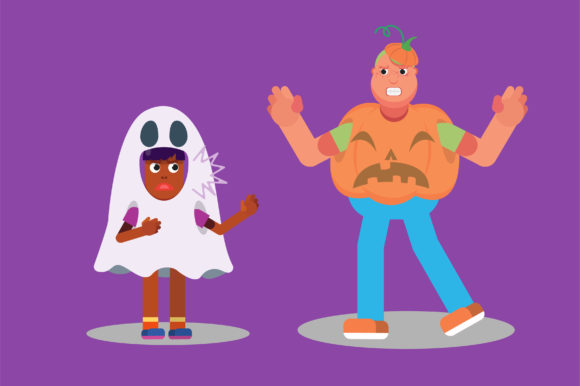
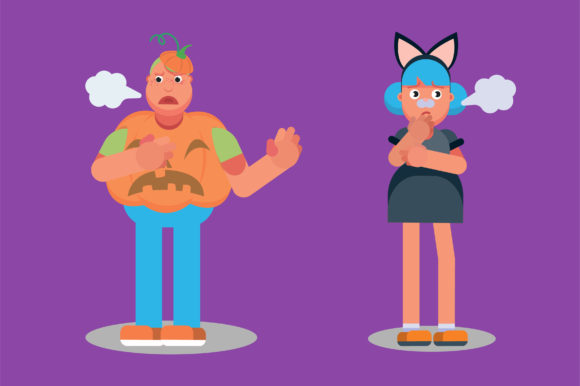
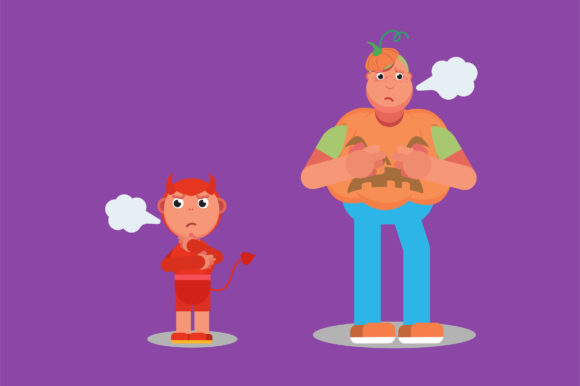
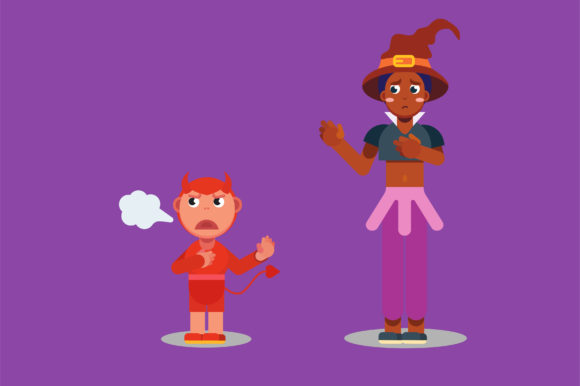
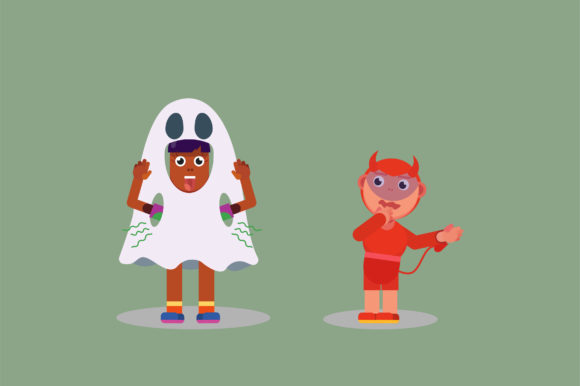
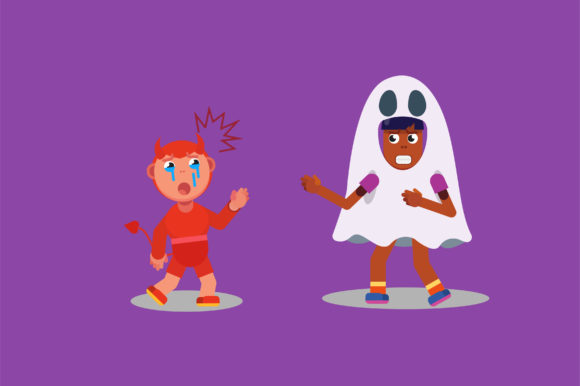
When I first opened the Kids Wearing Halloween Costume graphic design asset, I was struck by its moody, character-driven approach. This is not your typical bright and cheerful Halloween clipart. The Characters Halloween Vector Illustration presents sorrowful Halloween characters — a collection of gloomy and quirky Halloween people with a distinct emotional weight. The description mentions an illustration of sorrowful Halloween characters, and that melancholy personality is exactly what sets this asset apart from the hundreds of smiling pumpkin designs flooding the market. As someone who builds digital product shops for a living, I immediately saw the commercial potential for sellers who want to offer something different: a vector set that feels like a story rather than a decoration.
First Impressions and Visual Personality
The Kids Wearing Halloween Costume illustration leans into a quirky, slightly dark aesthetic that appeals to buyers looking for unique, non-generic Halloween visuals. The characters carry a sorrowful expression, which gives the entire set a narrative quality — these are not just costumes, but little personas with backstory. The vector style is clean enough for commercial production but retains a hand-drawn, imperfect charm that feels authentic. For sellers on Etsy, Creative Fabrica, or Shopify, this opens a niche: Halloween designs that resonate with fans of vintage, gothic, or storybook-inspired visuals. The mood sits somewhere between playful and melancholic, making it suitable for both children's products and more sophisticated, trend-driven merchandise.
Real Shop Scenario: Building a Halloween Collection
Imagine you are preparing a new seasonal collection for your Etsy shop or print-on-demand storefront. You want to stand out from the avalanche of generic Halloween graphics. You test Kids Wearing Halloween Costume across several product categories before committing to a full listing. First, you create a set of printable wall art prints featuring each character — the sorrowful expressions work beautifully as 8x10 digital downloads for parents who appreciate art with emotional depth. Next, you test the vectors as iron-on transfers for toddler t-shirts and onesies. The simple, bold lines of the vector of gloomy and quirky Halloween people translate well to fabric, and the muted color palette avoids the visual noise that often ruins small garment prints. Within a few hours of mockup testing, you can already see which products will carry the collection and which need adjustment.
Product Applications Across Digital and Physical Goods
This asset shines in a wide range of sellable formats. As an SVG design, it cuts cleanly for Cricut and Silhouette projects, provided you check the node density and remove any stray paths. The PNG design with transparent background works immediately for sublimation printing on mugs, tumblers, and tote bags. I also see strong potential in clipart bundles and sticker design — the character illustrations are compact enough to function as individual stickers, yet detailed enough to hold visual interest on a laptop or planner. For Canva templates, the vectors can be uploaded as elements and layered with text overlays for greeting cards, social media graphics, and invitation templates. The illustration style also lends itself to scrapbooking kits and digital paper packs, where each character can be placed as a focal point on patterned backgrounds.
Product Presentation and Thumbnail Appeal
In my experience, a great graphic design asset is only as valuable as its presentation. Kids Wearing Halloween Costume performs well in product mockups because the characters are visually distinct. When you place a sorrowful little ghost or a gloomy witch on a mockup t-shirt or wall art frame, the emotional contrast creates instant curiosity. For listing images, I recommend using one character per mockup to maintain visual hierarchy. The asset supports brand consistency across a collection — if you use the same character set for t-shirts, stickers, and printable art, your shop gains a cohesive look that builds customer trust. The melancholy vibe also helps with click-through potential; shoppers scrolling through dozens of bright, identical Halloween listings will pause on something that feels different. I have found that slightly darker, narrative-driven thumbnails often outperform cheerful ones in seasonal categories because they signal originality.
Where the Asset Works Best
After testing Kids Wearing Halloween Costume across multiple product types, I have identified the strongest applications. The illustration excels in large product previews where the character details and emotional expressions are visible — think 11x14 wall art, oversized tote bags, and throw pillows. It also works well in themed bundles where you pair the characters with coordinating patterns, borders, and typography. For merchandise graphics, the vector format allows you to scale the illustrations without loss, so they work on everything from small stickers to large posters. The sublimation design potential is strong because the color palette is moody but not muddy — it transfers cleanly onto polyester substrates. I also see value in packaging design for small businesses selling Halloween-themed goods, where the characters can appear on tags, boxes, and wrapping paper. The emotional tone of the sorrowful Halloween characters adds a layer of storytelling that elevates simple packaging into something memorable.
Where to Use Caution
Not every product format suits this asset. The Kids Wearing Halloween Costume illustrations have moderate detail, which means they can lose clarity in tiny sticker details — if you shrink the characters too much, the facial expressions become ambiguous. For Cricut projects with intricate cuts, you need to inspect the SVG paths for overlapping nodes and thin lines that might not cut cleanly. I also recommend avoiding overly complex layouts where multiple characters are stacked or layered — the strength of this set is each character's individual personality, so crowding them diminishes their impact. Low-resolution print products are a risk if you use the raster versions without checking the DPI; always confirm the file resolution before publishing. The illustration also requires careful contrast evaluation on dark backgrounds — the muted colors can blend into deep tones, so test the design on white, cream, and dark mockups before finalizing. For text-heavy templates like greeting cards, the characters work best as the hero element with minimal text overlay, rather than being buried under typography.
Practical Seller Notes from Real Testing
Before you list any product featuring Kids Wearing Halloween Costume, run through this checklist. First, test the design on real mockups — use a mockup generator or Photoshop to see how the characters look at actual product scale. Second, preview it as a marketplace thumbnail at 200x200 pixels; if the character is not recognizable at that size, consider using a single, bold character for the thumbnail. Third, check how it looks on white and dark backgrounds — the vector files likely include transparent backgrounds, but the color palette may shift depending on the substrate. Fourth, test print colors by running a sample on your home printer or through a local print shop; the on-screen blues and purples may print differently. Fifth, verify PNG transparency — ensure no white halos appear around the characters when placed on colored backgrounds. Sixth, inspect SVG cut quality by importing the file into Cricut Design Space or Silhouette Studio and simulating a cut. Seventh, confirm file resolution — the vector should be scalable, but any raster files should be at least 300 DPI at the intended print size. Eighth, organize files clearly for customers — use named folders for SVG, PNG, EPS, and AI formats, and include a brief usage guide. Ninth, pair it with appropriate font styles: a serif font for a vintage feel, a sans serif for modern simplicity, a script font for a whimsical touch, a handwritten font for a childlike vibe, and a display font for bold titles. Finally, confirm commercial licensing before selling finished products — most marketplaces require a commercial license for physical goods, and you need to respect any restrictions on digital resale or print-on-demand use.
Typography Pairing and Brand Identity
When I build a product collection around a graphic design asset like this, I always test multiple font pairings before settling on the final look. For Kids Wearing Halloween Costume, the gloomy and quirky Halloween people call for typography that complements their emotional tone. A serif font with a slightly worn or vintage feel reinforces the storybook quality. A sans serif font in a soft weight keeps the focus on the character without competing. A script font adds a touch of whimsy that contrasts nicely with the sorrowful expressions. A handwritten font feels authentic and childlike, which works well for products aimed at younger audiences. A display font with decorative details can be used sparingly for titles, but avoid anything too heavy or ornate that might overshadow the illustration. The goal is to create a cohesive brand identity across your product line — when customers see your typography and character art together, they should recognize your shop instantly.
Supporting a Professional Online Product Collection
Using Kids Wearing Halloween Costume effectively means thinking beyond the individual file. This asset can anchor an entire seasonal collection that includes printable design downloads, commercial design files for POD partners, and digital download products for creative marketplaces. The Characters Halloween Vector Illustration provides a consistent visual thread that ties together t-shirts, mugs, stickers, wall art, and social media templates. When you build a collection around a single aesthetic, you increase the perceived value of each product — customers are more likely to buy multiple items from a cohesive set. The illustration also supports visual storytelling in your product descriptions and promotional graphics. Use the characters in your blog posts, email newsletters, and social media posts to create a narrative around your Halloween collection. This not only boosts engagement but also positions your shop as a thoughtful curator rather than a generic reseller.
Final Assessment for Digital Sellers
From a business perspective, Kids Wearing Halloween Costume is a versatile graphic design asset with a clear niche. The vector of gloomy and quirky Halloween people offers something that the saturated Halloween market needs: emotional depth and visual distinction. It works well for Etsy product listings, print-on-demand merchandise, creative marketplace uploads, and small business branding projects. The key to success with this asset is testing it thoroughly across formats, understanding its limitations with small-scale cuts and dark backgrounds, and presenting it in mockups that highlight its unique character. If you are a digital product creator looking to build a Halloween collection that stands out, this set gives you a strong foundation. Just remember to pair it with thoughtful typography, organize your files cleanly, and always verify your commercial license before selling finished goods. The sorrowful Halloween characters may not be for every buyer, but for the right audience, they are exactly what the market has been missing.