Trick or Treat Costume Graphics & Illustrations Review
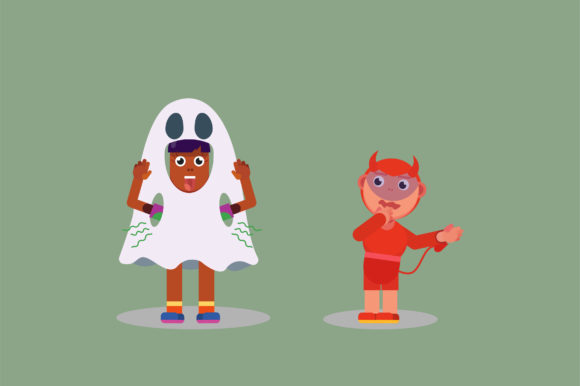
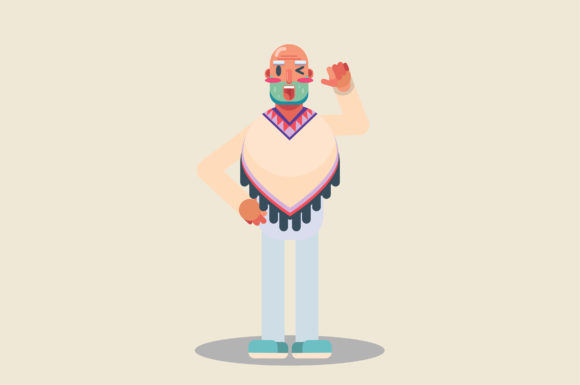
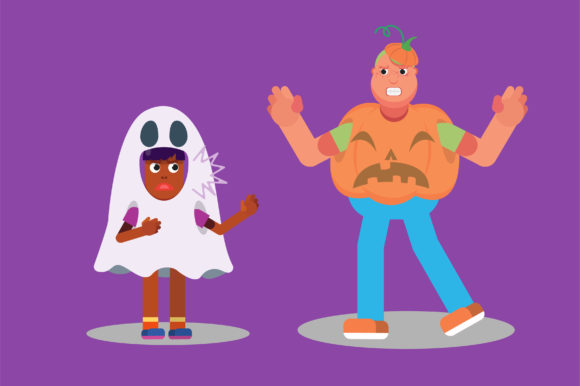
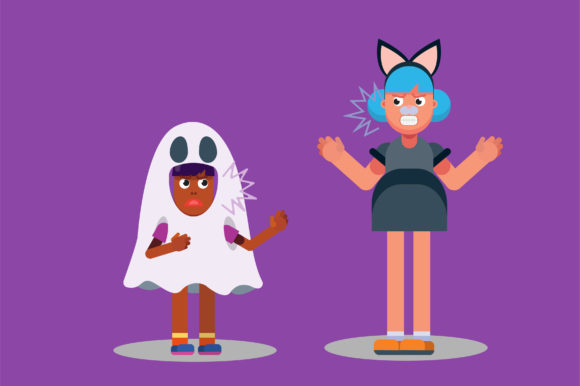
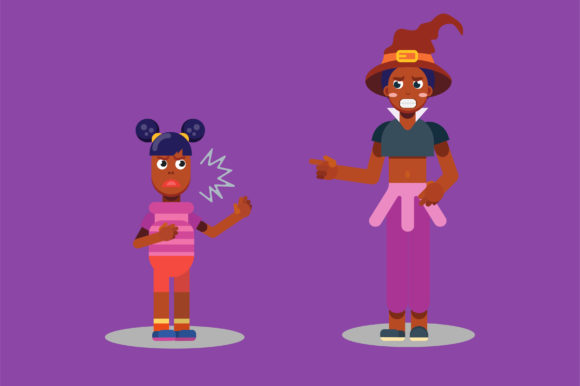
When I first opened the Trick or Treat Costume illustration set, I was preparing a visual concept for a local handmade soap company launching a limited-edition Halloween line. The client wanted something cheerful, not spooky—something that would appeal to families shopping at a seasonal market booth. Trick or Treat Costume immediately struck me as a graphic design asset built for exactly that kind of brief. The characters feel joyful, approachable, and full of personality. You get a vector of joyful and happy Halloween people, with clean lines and a playful energy that avoids the dark or gothic side of the holiday. This is not a horror illustration. It is a creative design that leans into community, celebration, and warmth.
What matters most to me as a designer working with real clients is whether a digital product like this can hold up across multiple applications. Trick or Treat Costume does that reasonably well. The illustration style feels consistent, with each character carrying the same visual language. The line weights are uniform, the color palette is bright but not overwhelming, and the poses read clearly even when scaled down. For a printable design used on soap labels, sticker sheets, or hang tags, this kind of consistency saves time during layout and reduces the need for additional editing. I could see this working as a hero graphic on a product display or as a repeating motif on a tote bag.
First Impressions and Visual Mood
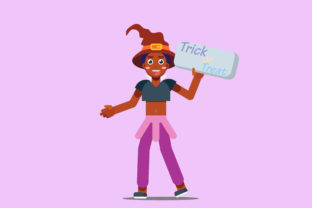
The mood of Trick or Treat Costume is unapologetically lighthearted. The characters are smiling, dressed in classic Halloween costumes, and arranged in a way that suggests movement and interaction. As a commercial design asset, it gives off a neighborhood block party vibe rather than a haunted house vibe. That makes it a strong candidate for small business branding that targets families, schools, or community organizations. If you are designing for a pumpkin patch, a fall festival, or a children's boutique, this design bundle fits naturally. The SVG design files and PNG design versions give you flexibility whether you are working in vector software or layering elements inside a Canva template.
One thing I noticed right away is the way the characters are composed. They are not isolated figures; they feel like part of a scene. That makes the clipart more useful for larger layout areas such as posters, banners, or window displays. However, for projects that require tight cropping or very small icon sizes, you may need to extract individual characters carefully. The set is designed as a cohesive group, so isolating one character might leave empty space in the composition. That is not a flaw, but it is something to keep in mind when you are building a brand identity that needs standalone marks or badges.
How Trick or Treat Costume Performs in Real Design Situations
In my client project, I used Trick or Treat Costume across three main applications: product labels, social media graphics, and a small run of merchandise. Here is how it performed in each area.
- Product labels and packaging design: The characters scaled well on a 3-inch by 4-inch soap box. The line art stayed crisp, and the colors printed cleanly on kraft paper stock. I tested it on both matte and glossy paper, and the illustration held its contrast nicely. The PNG design with transparency made layering over a textured background simple. For a handmade business that prints small batches at home, this is a practical asset that does not require heavy post-processing.
- Social media graphics and marketing visuals: I placed a cropped version of the characters on an Instagram square post and a Pinterest pin. The vector of joyful and happy Halloween people reads well at 1080 by 1080 pixels. The faces remain expressive even when the image is compressed for web. That is not always true of detailed illustrations, so this was a pleasant surprise. For content creators and bloggers who need seasonal visuals quickly, this asset saves time on custom illustration work.
- Merchandise and Cricut projects: I tested a single character as a t-shirt design for a small run using heat transfer vinyl. The SVG design opened cleanly in my cutting software, and the paths were well-formed without unnecessary nodes. The sublimation design test on a ceramic mug also looked good, though the lighter colors in the palette required a white base layer to pop. For print-on-demand sellers and Etsy product creators, this is a versatile digital design asset that adapts well to different substrates.
Where Trick or Treat Costume Works Best
Through hands-on testing, I found that Trick or Treat Costume excels in several specific use cases.
- Large layout areas and hero graphics: The full composition works beautifully as a central visual on a poster, flyer, or event invitation. The characters fill the space without feeling cluttered, and the cheerful mood immediately draws the eye. For editorial design in a community newsletter or a school event flyer, this asset creates an instant emotional connection.
- Product mockups and themed collections: If you are building a commercial design bundle for a seasonal campaign, Trick or Treat Costume can serve as the anchor illustration. I used it in a product mockup for a gift bag set, and the client responded positively because the characters felt inclusive and fun. It works especially well for packaging design where the product is meant to be given as a gift or used in a group setting.
- Decorative accents and supporting brand elements: The individual characters, when extracted, work nicely as accent graphics on hang tags, sticker sheets, or notebook covers. For sticker design and printable design projects, having a cohesive set of characters means you can create a whole collection without mixing styles from different artists.
- Social media posts and Canva template integration: Because the PNG design files include transparency, you can drop them directly into a Canva template or any other design tool without additional masking. That is a huge time saver for marketers and small business owners who are not using professional vector software. The graphic design asset feels accessible without sacrificing quality.
Where to Use Trick or Treat Costume with Caution
No design asset is perfect for every project, and Trick or Treat Costume has a few limitations that designers should consider before committing to it.
- Small sizes and crowded layouts: When the illustration is scaled below about 1.5 inches in print or 150 pixels on screen, the details in the characters' faces and costumes begin to blur. For logo design or any application where the graphic needs to be recognizable at favicon size, this asset is not ideal. You would need to simplify the shapes significantly, which defeats the purpose of using a ready-made illustration.
- Complex backgrounds and low-contrast designs: The color palette includes several mid-tone values, which can disappear against busy or dark backgrounds. I tested it on a deep purple background, and the darker costume colors lost their definition. If you plan to use this asset on anything other than a light or neutral background, you will need to add outlines or drop shadows to preserve readability. That extra step is manageable, but it is worth noting for web design or social media graphics where contrast is critical for accessibility.
- Minimalist branding and professional corporate materials: The style of Trick or Treat Costume is deliberately playful. That is a strength for many projects, but it will clash with a brand identity that relies on minimalism, clean geometry, or restrained color. If your client works in a more conservative industry, or if the project requires a sophisticated tone, this asset may feel out of place. Always consider the visual hierarchy and overall brand personality before integrating a illustrated asset this expressive.
Practical Designer Notes for Using Trick or Treat Costume
Before you use Trick or Treat Costume in a client project or for your own commercial design work, I recommend running through these checks. They are the same tests I apply to every creative marketplace asset before I commit to it.
- Test it in black and white: Print or preview the illustration in grayscale to see how the values separate. In this case, the characters still read well, though the lighter figures lose some presence next to the darker ones. If your final output will be monochrome, consider adjusting the contrast in your vector software.
- Check contrast on light and dark backgrounds: I placed the SVG design on white, cream, light gray, dark gray, and black backgrounds. On dark backgrounds, the light characters pop nicely, but the dark costumes disappear. For packaging design or sticker design, you may want to add a subtle outline or use the PNG design with a drop shadow effect.
- Preview at small and large sizes: Resize the illustration in your layout software and check the line art at both extremes. At very large sizes, the vector paths remain smooth, but at very small sizes, the facial details can become muddy. I recommend using the full composition for hero graphics and only using individual characters at sizes above two inches.
- Place it on real mockups: I tested this asset on a product mockup for a gift bag, a t-shirt, and a social media post. Seeing it in context reveals how the colors interact with different materials. The illustration printed well on cotton, but on polyester, the lighter shades needed a white underlay for true color vibrancy.
- Test print quality: I printed the digital design asset on matte sticker paper and glossy photo paper. On matte, the colors appeared slightly muted, which actually gave it a charming vintage feel. On glossy, the colors were punchy and bright. Depending on the brand you are designing for, one finish may suit the project better than the other.
- Review file formats: The ZIP file contains Ai, EPS 10, JPG, PNG, and SVG. For most printable design and Cricut project work, the SVG and PNG files are the most useful. The Ai file opens in Adobe Illustrator and preserves all the layers, which is helpful if you need to customize colors or remove elements. The EPS 10 version is compatible with older vector software, which can be a lifesaver when working with legacy systems.
- Inspect PNG transparency: The PNG files included with Trick or Treat Costume have clean transparency edges. I did not see any leftover halos or rough pixelation around the characters. That is important for social media graphics and web design where a jagged edge would look unprofessional.
- Check SVG editability: The SVG files open cleanly in browser-based tools and in Illustrator. The paths are grouped logically, which makes it easy to change colors or remove specific characters. For brand identity work that requires color consistency, having editable vectors is essential.
- Compare with font styles: I tested Trick or Treat Costume alongside a serif font, a sans serif font, a script font, a handwritten font, and a display font. The illustration pairs best with a clean sans serif or a friendly handwritten font. A formal serif or an elaborate script creates too much visual tension. For logo design or packaging design, I would recommend a rounded sans serif to echo the softness of the characters.
- Confirm commercial licensing: Before using any graphic design asset for a client project or print-on-demand product, verify the license terms. Trick or Treat Costume is listed as a commercial design asset, but the specific restrictions on print runs, resale, or digital distribution vary by seller. Always read the license file included in the ZIP and, if in doubt, contact the creator. This step protects both you and your client from legal issues down the road.
Overall Impression and Client Suitability
After spending time with Trick or Treat Costume across multiple real-world applications, I can confidently say it is a solid creative design asset for the right client. It excels in projects that need a cheerful, community-focused Halloween aesthetic. It is particularly well-suited for handmade businesses, small business branding, Etsy product listings, print-on-demand merchandise, and seasonal marketing visuals. The vector of joyful and happy Halloween people delivers exactly what the product description promises: a set of illustrations that feel inviting and fun.
The ZIP file's variety of formats—Ai, EPS 10, JPG, PNG, SVG—gives designers flexibility whether they work in professional software or browser-based tools. The graphic design asset adapts to sticker design, t-shirt design, sublimation design, packaging design, and social media graphics without requiring heavy modification. That kind of versatility is exactly what I look for when shopping on a creative marketplace for a design bundle that needs to earn its keep in a client project.
However, I would not recommend Trick or Treat Costume for projects that demand minimalism, professional corporate tone, or very small reproduction sizes. It is not a logo design asset, and it should not be forced into a role that requires subtlety or restraint. When used within its strengths, it is a delightful and efficient digital product that saves hours of custom illustration time. For designers who work with seasonal branding, community events, or family-oriented products, this asset deserves a place in your toolkit.
If you are a brand owner, marketer, content creator, blogger, publisher, crafter, Cricut user, digital seller, or print-on-demand seller, Trick or Treat Costume offers a polished, ready-to-use solution that can lift your Halloween projects without breaking your budget or your deadline. Just remember to test it in your specific output format, check the commercial license, and pair it with a complementary font choice. With those precautions in place, this PNG design and SVG design set can become a reliable go-to for October campaigns and beyond.